Exploring the ideas, practices, and futures of the humanities.
The New Directions in the Humanities Research Network brings together scholars, educators, writers, and cultural practitioners to examine how the humanities make meaning—across traditions and innovations, disciplines and publics. Member-based and scholar-led, the Network advances research that connects interpretation with method, and critique with practice.
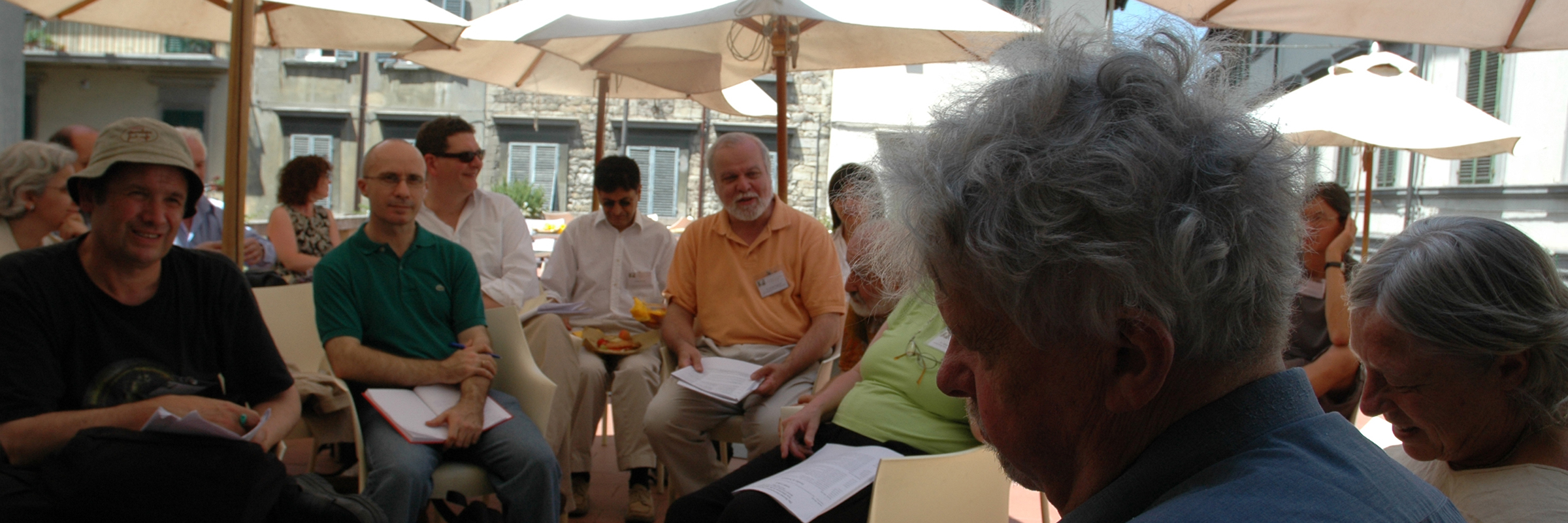
Sir Jack Goddy, Second International Conference on New Directions in the Humanities, Monash University Centre in Prato, Italy (2005)
Our Platforms
Our Platforms
Founded in 2003, the New Directions in the Humanities Research Network emerged as a space where established scholarly traditions could be reconsidered in light of changing cultural, technological, and intellectual conditions. It was created to ask how the humanities might renew their questions, methods, and publics—connecting textual interpretation, historical inquiry, critical theory, and creative practice with contemporary social and political concerns. Over time, the Network has developed into a global forum in which the humanities are understood not only as a set of disciplines, but as a set of practices through which societies remember, argue, imagine, and make meaning in a rapidly changing world.
Annual Conference
The International Conference on New Directions in the Humanities is hosted each year in partnership with a university or cultural institution. Past hosts include the University of the Aegean (Rhodes), Monash University Centre in Prato, the University of Cambridge, the University of Carthage (Tunis), the American University of Paris, UCLA, Universidad de Granada, Centre Mont-Royal (Montréal), Eötvös Loránd University (Budapest), Universidad CEU San Pablo (Madrid), the University of British Columbia, the University of Illinois at Chicago, Imperial College London, the University of Pennsylvania, Sorbonne Université, Sapienza University of Rome, and the University of Hawai‘i at Hilo. Each edition develops a Special Focus that responds to emerging questions—ranging from technology and interdisciplinarity to translation, freedom, and the place of the humanities in public life. Proposals and presentations are welcomed in both English and Spanish.
Journals
The New Directions in the Humanities Journal Collection publishes peer-reviewed, hybrid open access research across four core journals: The International Journal of Literary Humanities, which examines literature as a social, cultural, and aesthetic practice; The International Journal of the Humanities: Annual Review, which offers broad interdisciplinary reflections across humanities traditions; The International Journal of Humanities Education, which investigates teaching and learning in the humanities across diverse contexts; and The International Journal of Communication and Linguistic Studies, which explores questions of language, meaning, discourse, and communication. Together, the journals support scholarship that connects interpretation, history, theory, pedagogy, and cultural analysis, and all submissions undergo double-anonymous, rubric-guided peer review with constructive editorial feedback and clear pathways from conference contributions to full publication.
Book Imprint
The New Directions in the Humanities Book Imprint publishes monographs and edited collections that advance humanities scholarship across disciplines, regions, and traditions. Volumes range from conceptual and historical studies to thematic anthologies and interdisciplinary investigations, reflecting the Network’s commitment to a diverse and inclusive publishing program. The imprint welcomes both broad and highly specialized projects and offers open access options that increase global visibility and impact.
Online Member Knowledge Community:
The Network’s Member Knowledge Community on CGScholar offers a year-round space for members to share profiles, papers, creative projects, pedagogical reflections, and works-in-progress. Designed for collaboration, it provides a multimodal authoring environment with light, community-guided review to strengthen clarity, purpose, and reader context before sharing. Conference activity, journal articles, and book projects are connected within one integrated research ecosystem, supporting ongoing engagement across literary, historical, philosophical, cultural, and interdisciplinary humanities.
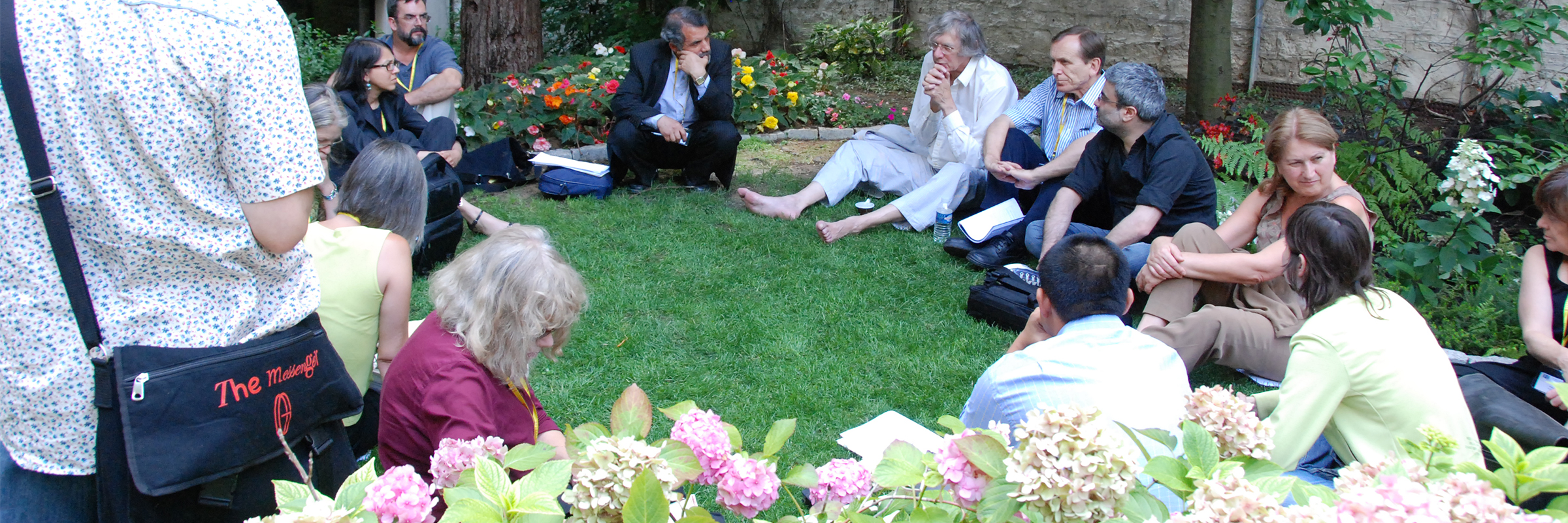
Ted Honderich, Fifth International Conference on New Directions in the Humanities, American University of Paris, France (2007)
Leadership
The Network’s leadership provides overall direction and stewardship—shaping priorities, supporting programs, and sustaining an inclusive, scholar-led community. The current chair is Asun (Asunción) López-Varela (Universidad Complutense de Madrid).
Partnerships extend the scholar-led mission of the Network—linking universities, societies, and cultural institutions to reimagine the humanities for changing publics. Recent and recurring collaborators include: